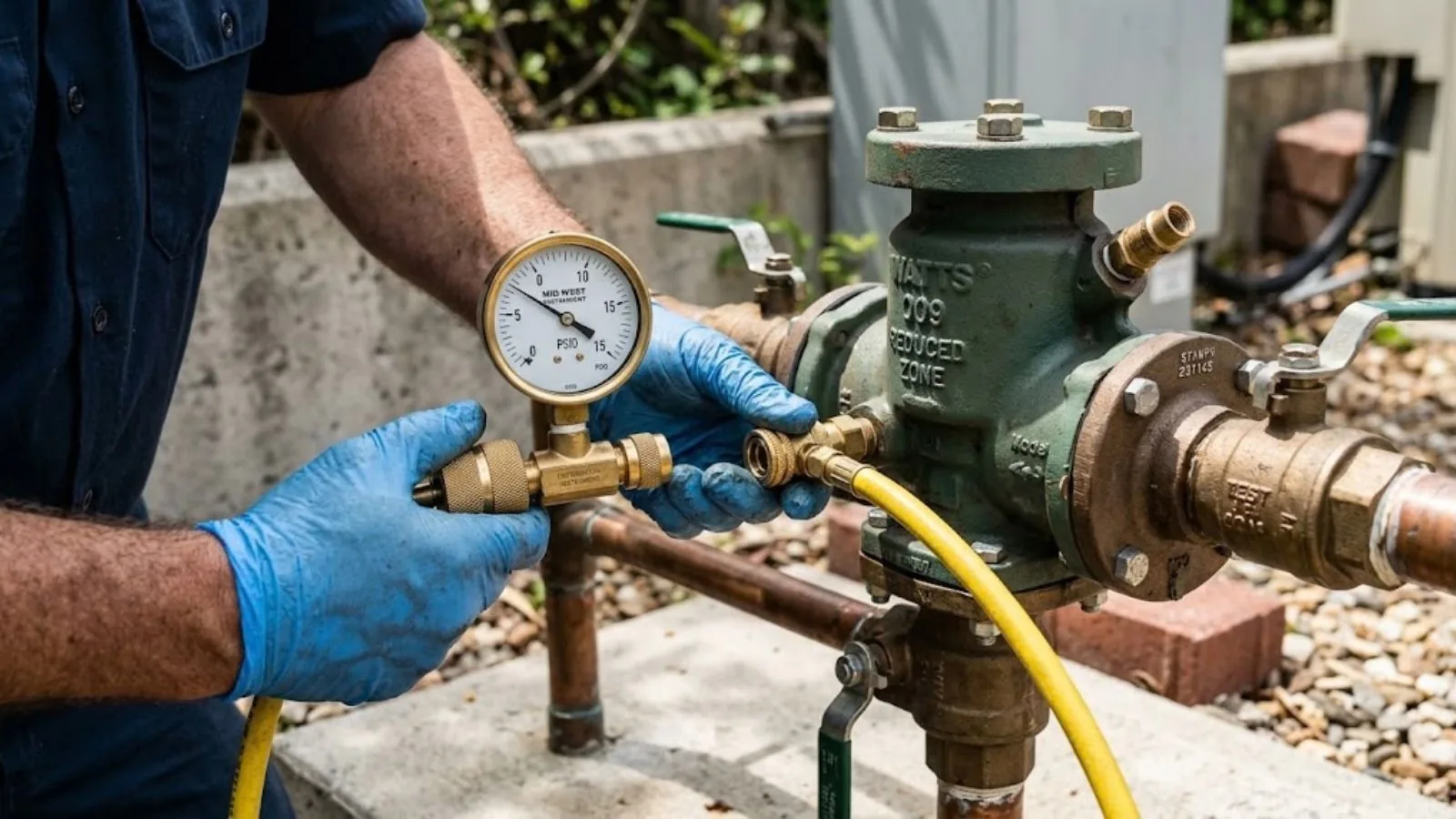
If you've received a notice from your water provider about annual backflow testing and weren't quite sure what it was asking you to do, you're not alone, it's one of the more misunderstood recurring plumbing requirements homeowners run into, mostly because most people never think about the device involved until a notice arrives.
What a Backflow Preventer Actually Does
A backflow preventer is a mechanical device that stops water from flowing backward through your plumbing system under certain conditions, specifically, a sudden drop in municipal water pressure, which can otherwise create a siphoning effect that pulls water (and anything mixed into it) backward from your property into the public water supply. On a property with an irrigation system, that backward flow could pull fertilizer, pesticide residue, or other contaminants back toward the drinking water system, which is exactly the scenario a backflow preventer exists to stop.
Why Testing Is Required Annually
The device's internal components, springs, seals, check valves, wear over time like any mechanical part, and a failed backflow preventer often shows no visible external sign that anything is wrong. Annual testing by a certified tester is the standard way water providers confirm the device is still functioning as intended, since waiting for visible failure would mean the protection had already stopped working, possibly for a long time, before anyone noticed.
Who Actually Needs One
Irrigation systems are the most common trigger for a backflow preventer requirement, but certain other plumbing configurations require one too, some commercial connections, fire sprinkler systems, and properties with specific cross-connection risks. If you've had an irrigation system installed at any point, there's a reasonable chance a backflow preventer was required as part of that installation, whether or not you remember it specifically.
What the Test Actually Involves
A certified tester attaches calibrated gauges to the device and runs it through a specific sequence that checks each internal check valve and relief mechanism independently under controlled conditions. This isn't a visual inspection, it's a functional test that produces specific pressure readings, which most water providers require reported directly to them or to a certified testing database, not just kept as your own personal record.
What Happens If a Device Fails Testing
A failed test doesn't typically mean immediate water shutoff, most providers give a defined window to have the device repaired or replaced and retested. What it does mean is the device isn't currently providing the protection it's supposed to, which is worth addressing within that window rather than letting it lapse, both for compliance and for the actual purpose the device serves.
A New Irrigation System Needs Testing From Day One
If you're installing an irrigation system for the first time, the backflow preventer needs initial testing and certification as part of that installation, not starting with next year's annual cycle. This is an easy step to overlook when the focus is on the irrigation design and plant layout rather than the compliance side of the project, so it's worth confirming testing and certification is actually scheduled before considering the installation complete.
None of this is especially complicated once explained, but the notice alone rarely makes any of it clear, hopefully this fills in the gap between "you're due for backflow testing" and actually understanding what that means and why it matters.
What Happens If You Simply Ignore the Notice
Ignoring a backflow testing notice doesn't make the requirement go away, and most water providers have an escalation process for non-compliance that can eventually include additional fees or, in more persistent cases, water service restrictions until the test is completed. Beyond the compliance consequences, ignoring the notice also means an actual safety device, one specifically protecting the public water supply from contamination, may be sitting unverified and potentially non-functional for another year, which is the actual reason the requirement exists in the first place, not simply a bureaucratic formality.
Choosing a Certified Tester
Backflow testing in California must be performed by a certified tester, not just any general plumber, since it requires specific training and calibrated equipment beyond standard plumbing work. When scheduling a test, confirming the technician's certification is current, and that they're familiar with your specific water provider's reporting requirements, avoids a scenario where the test itself is completed correctly but the paperwork doesn't reach the right place in the right format, which can still leave you technically out of compliance despite having done the right thing.
Real Estate Transactions and Backflow Compliance
If you're selling a property with an irrigation system or other backflow-requiring configuration, current backflow test documentation is sometimes requested during escrow, and an out-of-compliance device discovered during that process can slow down a sale at an inconvenient time. Keeping testing current isn't just about avoiding water provider penalties, it's also one less item that can complicate a future transaction if and when the property changes hands.
Keeping Your Own Compliance Records
Even though certified testers typically report results directly to the water provider, keeping your own copy of each year's test result is a reasonable habit, particularly useful if a question ever arises about whether a specific year's testing was actually completed and reported correctly. A simple folder, physical or digital, with each year's documentation saves a potentially frustrating back-and-forth with a water provider's records department down the line, especially if a discrepancy surfaces years after the fact when memories of the specific appointment have faded.
A backflow preventer is a small, mostly invisible part of a home's plumbing, but it does a real job. Keeping it tested is a small annual task with a genuinely meaningful purpose behind it, worth the small hour it takes each and every year to keep the whole system genuinely compliant and safe.
Need a Plumber in San Marcos?
San Marcos Express Plumbing dispatches throughout San Marcos and the surrounding North County inland San Diego County area, 24/7 emergency dispatch.
Call (760) 986-1999