Tankless Water Heater Service in San Marcos, CA
Tankless water heaters heat water on demand rather than storing a large reserve, which means endless hot water for the right household, but they have their own installation requirements and maintenance needs that differ meaningfully from a standard tank.
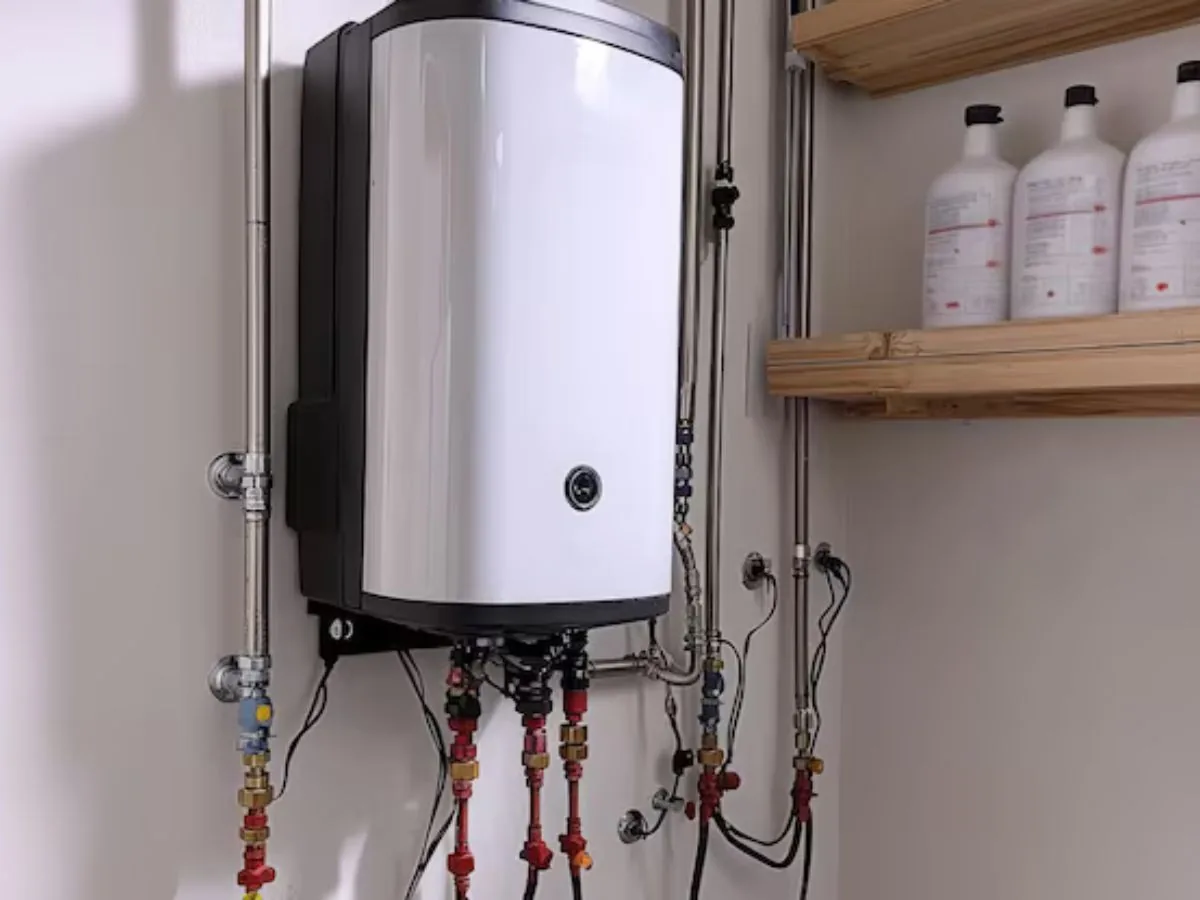
How We Diagnose the Problem
Tankless units fail differently than tank units: an error code on the unit's display is often the fastest diagnostic starting point, pointing toward issues like insufficient gas supply, venting restriction, or, most commonly in this region, scale buildup on the heat exchanger from hard water reducing flow and triggering a fault.
Signs You Need This Service
- An error code displayed on the unit
- Water temperature that fluctuates rather than staying consistent
- Reduced hot water flow rate compared to when the unit was new
- The unit hasn't been descaled in the last year
- Longer-than-expected wait time for hot water to reach the tap
Tankless Water Heater Service Pricing & What Affects It
Tankless repair costs vary by whether the issue is a part replacement (like an igniter or flow sensor) or descaling maintenance. New tankless installation typically costs more up front than a tank replacement due to venting and gas line sizing requirements, which gets factored into an honest cost comparison against staying with a tank system.
Why Hard Water Hits Tankless Units Harder
Tankless units heat water by passing it across a compact heat exchanger rather than storing it in a large tank, which means mineral scale from hard water concentrates on a smaller surface area and can restrict flow more noticeably than the same water would affect a tank's larger interior. This is why annual descaling is recommended more strongly for tankless units in San Diego County than it might be in a region with naturally softer water.
Sizing a Tankless Unit Correctly
Tankless units are rated by flow rate (gallons per minute) rather than storage capacity, and sizing one incorrectly for the household's simultaneous hot water demand, running a shower and the dishwasher at once, for example, is one of the most common reasons a new tankless installation disappoints a homeowner who was expecting truly unlimited hot water.
Gas Line and Venting Requirements
Gas-fired tankless units generally require a larger gas line than a comparable tank unit, along with specific venting materials rated for the higher exhaust temperatures involved. Confirming existing gas line capacity is one of the first steps before quoting a tankless installation, since undersized supply lines are a common obstacle discovered mid-installation if not checked up front.
Maintenance That Extends Tankless Lifespan
Beyond descaling, a periodic filter check (many units have an inlet water filter that catches sediment) and confirming venting hasn't been obstructed are the main upkeep items that keep a tankless unit running at its rated efficiency for its full expected lifespan.
Recirculation Pumps and Tankless Units
Some households pair a tankless unit with a recirculation pump to reduce the wait for hot water at distant fixtures, a common upgrade request in this area given both the appeal of on-demand hot water and San Diego County homeowners' general interest in water efficiency, though it requires compatible tankless models and proper setup to work as intended.
Indoor vs. Outdoor Tankless Installation
Tankless units can be installed indoors with proper venting or, for gas models, sometimes mounted outdoors where local climate allows, which changes venting requirements substantially and can simplify installation in homes where indoor space or existing venting is limited, worth evaluating as an option during the initial installation consultation.
Electric Tankless Units for Point-of-Use Applications
Smaller electric tankless units are sometimes installed at a single point of use, a distant bathroom or an outdoor sink, rather than as a whole-home solution, providing hot water exactly where it's needed without waiting for it to travel from a central unit. These have different electrical demands than a whole-home gas tankless system and are evaluated separately.
Frequently Asked Questions
Annually is a common recommendation in hard-water areas like San Diego County, though it can vary by household water usage and whether any pre-filtration is already in place.
Often yes, but it depends on available venting routes and gas line capacity, that's confirmed during an on-site assessment rather than assumed.
Yes, gas tankless units still require electricity for ignition control and the display, so they're not a workaround for power outages the way some homeowners assume.