Copper vs. PEX: What San Marcos Homeowners Should Know Before Repiping
2026-01-29
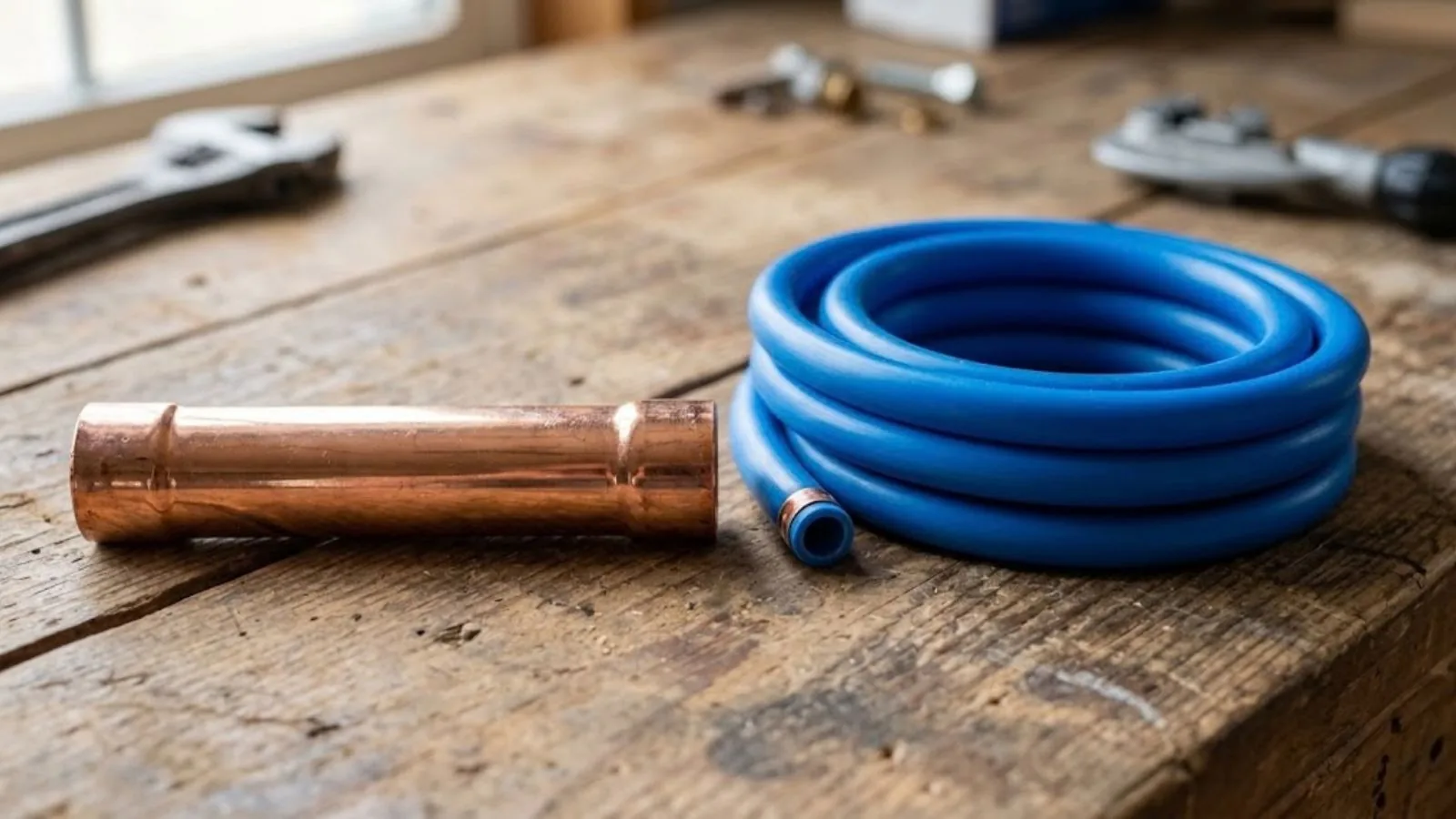
If you've reached the point where repiping is on the table, usually after one too many pinhole leaks on the same aging line, the next real decision is what material to repipe with. For decades that meant copper by default. Today, most residential repipes use PEX instead, and it's worth understanding why before you commit either way.
What Copper Has Going For It
Copper has a long track record, it's been the standard for residential water supply lines for most of the last century, and a well-installed copper system can last 50 years or more. It's rigid, resistant to UV damage if ever exposed, and doesn't have the same reputation concerns some homeowners associate with plastic piping. The tradeoffs are cost (copper is generally more expensive both in material and labor, since it requires soldered joints) and, specifically relevant here, vulnerability to San Diego County's hard water, which contributes to internal corrosion and eventual pinhole leaks over enough decades of service.
Why Most Repipes Today Use PEX Instead
PEX (cross-linked polyethylene) tubing is flexible, which means it can be routed through wall cavities and framing with far fewer joints than rigid copper requires, and fewer joints generally means fewer potential failure points over the system's life. It's also more resistant to the kind of scale-driven internal corrosion that affects copper over time, and it's generally faster and less expensive to install, which shows up in the total cost of a whole-home repipe.
The Concerns People Raise About PEX
PEX has had a few legitimate concerns raised over its history, early formulations had some issues with certain water chemistries, and it's not UV-stable, so it can't be used for exposed outdoor runs without protection. Modern PEX has addressed most of the early formulation issues, and for indoor residential use, routed properly, it's now a mainstream, code-accepted choice used in the large majority of new construction and repipe projects across the country, not just here.
What This Means for a San Marcos Repipe Specifically
Given the area's hard water, PEX's greater resistance to scale-related internal degradation is a real practical advantage over the decades a repipe is expected to last. That's not to say copper is a bad choice, it's still used, and some homeowners prefer it for reasons beyond pure performance math, but for most whole-home repipes in this area, PEX has become the more common recommendation for a reason grounded in the actual local water conditions, not just cost.
What a Repipe Decision Doesn't Have to Be
Choosing a material doesn't have to be a blind decision. A reasonable conversation before committing includes what's actually failing in your current system, how the two materials perform specifically against your area's water, and what a whole-home versus partial repipe would actually involve for your home's layout. If you're dealing with recurring leaks on aging pipe and trying to figure out whether another spot repair still makes sense or whether it's time for a full repipe, that's worth an honest assessment rather than assuming either extreme.
What a Whole-Home Repipe Actually Involves
Regardless of which material you choose, the general process looks similar: an assessment of every existing supply line's condition and routing, a plan for how new lines will reach each fixture with the least disruption to walls and finished surfaces, and a sequenced installation that typically shuts off water in sections rather than to the whole house for the full duration. Most residential repipes are completed within a few days rather than weeks, though the exact timeline depends on the home's size and how accessible the existing plumbing routes are. A permit and inspection are typically required in California for a project of this scope, since it involves the structural water supply system rather than a simple fixture swap, and that process is generally handled as part of the job rather than left for the homeowner to navigate on their own.
Cost Considerations Beyond the Pipe Material Itself
While PEX is generally less expensive than copper for material and labor combined, the total cost of any repipe depends heavily on factors beyond the pipe choice: how many fixtures need to be connected, whether walls or slab need to be opened to route new lines, and whether the project is timed alongside other renovation work already underway. A repipe planned to coincide with a kitchen or bathroom remodel, when walls are already being opened for other reasons, is often meaningfully less disruptive and less costly than the same repipe done as a standalone project later.
A Note on Mixed Systems
It's also worth knowing that a repipe doesn't strictly have to be one material throughout. Some projects use PEX for the bulk of the home's supply lines while keeping short copper stub-outs at fixture connections, combining PEX's flexibility and cost advantage for the long runs with copper's rigidity right at the point where a faucet or valve attaches. This kind of hybrid approach isn't universal, but it's a reasonable option to ask about if you're drawn to aspects of both materials rather than feeling locked into an all-or-nothing choice.
Getting a Second Opinion Before a Major Repipe
Given the cost and disruption involved in a whole-home repipe, getting a second assessment before committing isn't unreasonable, particularly if the first recommendation seems to assume whole-home replacement without clearly explaining why a partial repipe wasn't considered. A second look that confirms the same scope gives you confidence in the decision; one that suggests a smaller intervention might work gives you a real option to weigh, either way you're making a large financial decision with more information than a single opinion alone provides.
Whichever material you land on, the bigger decision, repipe now versus keep patching an aging system, usually matters more to your long-term cost than which pipe material wins the debate between the two.
Need a Plumber in San Marcos?
San Marcos Express Plumbing dispatches throughout San Marcos and the surrounding North County inland San Diego County area, 24/7 emergency dispatch.
Call (760) 986-1999