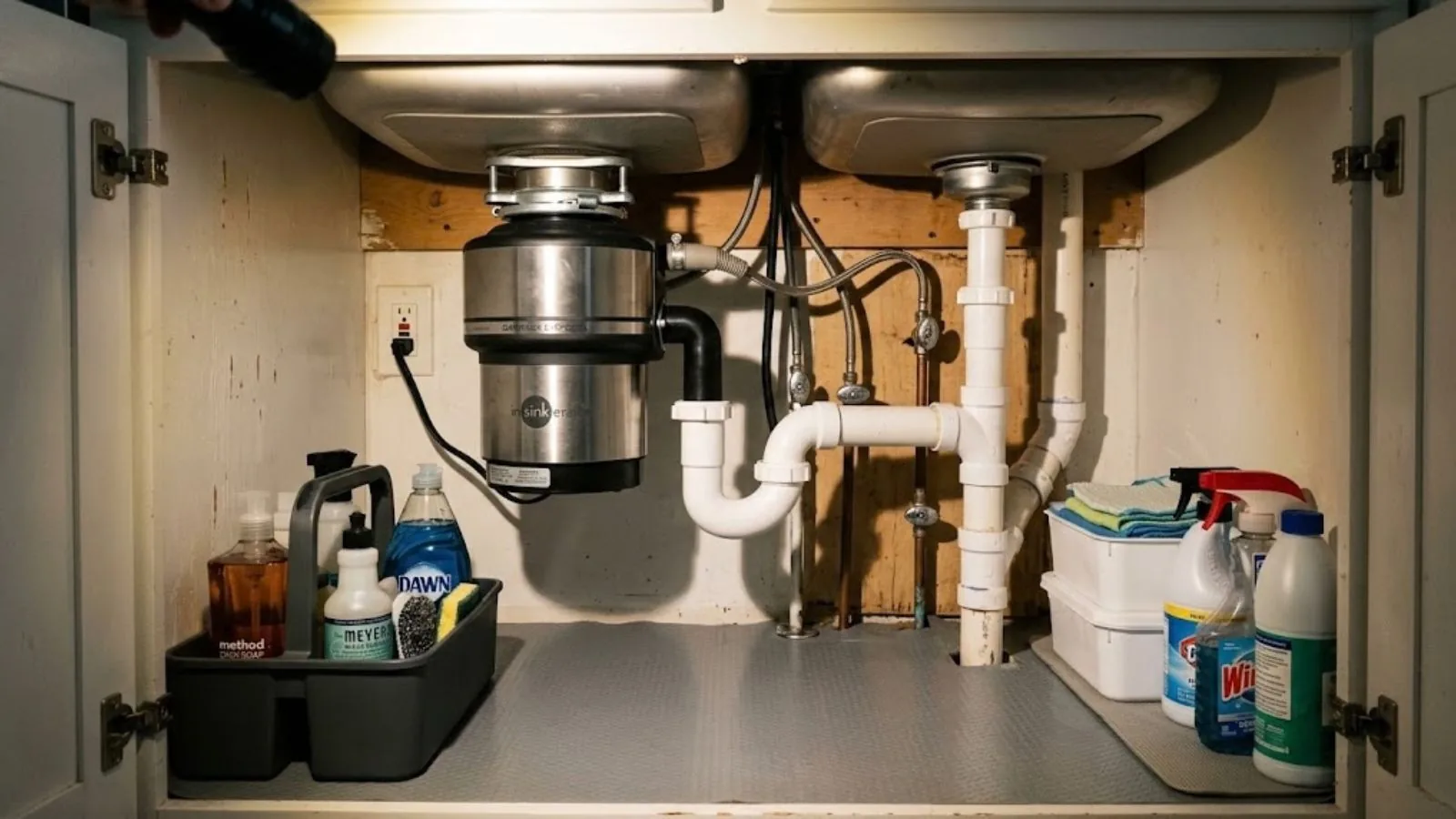
A garbage disposal feels like it can handle anything, it's a motor with blades, after all, but the reality is that certain habits meaningfully shorten a disposal's life while others keep it running smoothly for a decade or more. Here's a genuinely practical breakdown, not just a generic list.
Do: Run Cold Water Before, During, and After Use
Cold water keeps any grease or oil that ends up in the disposal solid rather than letting it liquefy and coat the blades and chamber, where it can build up over time. It also helps flush ground material fully through the trap and into the drain line rather than leaving residue behind in the disposal itself.
Don't: Pour Grease or Cooking Oil Down It, Ever
This is probably the single most damaging habit for both a disposal and the drain line behind it. Grease and oil may go down as a liquid, but they solidify as they cool further down the pipe, gradually narrowing the interior diameter and creating exactly the kind of buildup that leads to a clog months later. Pour cooled grease into a container for disposal in the trash instead.
Do: Cut Larger Scraps Into Smaller Pieces First
A disposal handles smaller pieces of food waste more efficiently and with less strain on the motor than large chunks forced in all at once. This is especially true for anything fibrous or dense.
Don't: Put Fibrous Vegetables Down It
Celery, corn husks, onion skins, and similar fibrous material can wrap around the disposal's spinning blades rather than being cut cleanly, which strains the motor and is a common cause of jams. These are better composted or thrown away than run through a disposal at all.
Don't: Overload It With Coffee Grounds
Coffee grounds are often assumed to be disposal-friendly since they're small, but in any real quantity they tend to accumulate into a dense, sludge-like buildup in the trap and drain line rather than breaking down and flushing through cleanly. A small amount occasionally isn't a problem, but grounds shouldn't be a routine disposal item.
Do: Run It Regularly, Even When Empty
A disposal that sits unused for extended periods is more prone to rust, corrosion on internal components, and odor buildup than one used regularly. Running it briefly with water even when there's nothing specific to grind helps keep the components moving and the chamber rinsed.
Don't: Ignore a Humming Sound With No Spinning
If you flip the switch and hear a hum but no grinding action, the disposal is jammed, not broken; many models can be cleared using the reset button and, with power fully disconnected, an Allen wrench inserted into the bottom to manually rotate the flywheel. Ignoring a jam and repeatedly flipping the switch risks burning out the motor.
When It's Time for Professional Attention
A disposal that's leaking from underneath, making a grinding or rattling noise beyond a simple jam, or tripping its circuit breaker repeatedly is past the point of a DIY fix. At that stage, a proper inspection or replacement is more sensible than continuing to work around a failing unit, and if backups are also showing up further down the line, it's worth having the connected drain line checked at the same time.
None of these habits are complicated, but consistently following the don'ts and doing the dos is genuinely the difference between a disposal that lasts eight years and one that lasts fifteen.
Ice Cubes: Useful, But Not for the Reason Most People Think
Running ice cubes through a disposal is a commonly repeated tip, and it does have a real purpose, just not the one most people assume. Ice doesn't meaningfully "sharpen" the blades, which aren't actually sharp cutting blades but blunt impellers that shred food through centrifugal force. What ice does do well is help dislodge small residue stuck to the impellers and the chamber's interior wall, and combined with a small amount of citrus peel, it can also help with routine odor control between more thorough cleanings.
Why a Disposal Sometimes Smells Even When It's Working Fine
A functioning disposal with no mechanical issues can still develop odor over time simply from small amounts of food residue that don't fully rinse away in the normal course of use, particularly in the splash guard and upper chamber area that isn't always reached by water flow during a quick rinse. Periodically lifting and cleaning the rubber splash guard directly, rather than assuming odor issues are always coming from deeper in the unit or the drain line, resolves a meaningful share of persistent smell complaints without any professional service needed at all.
Matching Disposal Capacity to Actual Use
A larger household that cooks frequently generally benefits from a higher horsepower disposal than a single-person household using it mainly for light scraps, since a unit working near its rated capacity constantly tends to wear out faster than one with some margin for typical daily use. If you're replacing a disposal that's failed well before its expected lifespan, it's worth considering whether the original unit was actually matched to how the kitchen is used, rather than assuming the same capacity is automatically the right choice for the replacement.
A Final Word on Prevention vs. Cure
Every habit covered here is meaningfully cheaper and less disruptive than the repair or replacement it prevents. A few seconds of running cold water, a moment's thought before scraping vegetable trimmings into the sink, and periodically running the disposal even when it's not strictly needed all cost nothing and take almost no time, while the alternative, a failed unit, a clogged drain line behind it, or a burned-out motor from repeated jamming, costs real money and real inconvenience to fix.
Need a Plumber in San Marcos?
San Marcos Express Plumbing dispatches throughout San Marcos and the surrounding North County inland San Diego County area, 24/7 emergency dispatch.
Call (760) 986-1999