Ask five different sources how often you should have your drains professionally cleaned and you'll get five different answers, mostly because the honest answer depends heavily on which drain, what goes down it, and the age and material of the pipe behind it, not a single number that applies to every home.
Kitchen Drains Usually Need More Frequent Attention
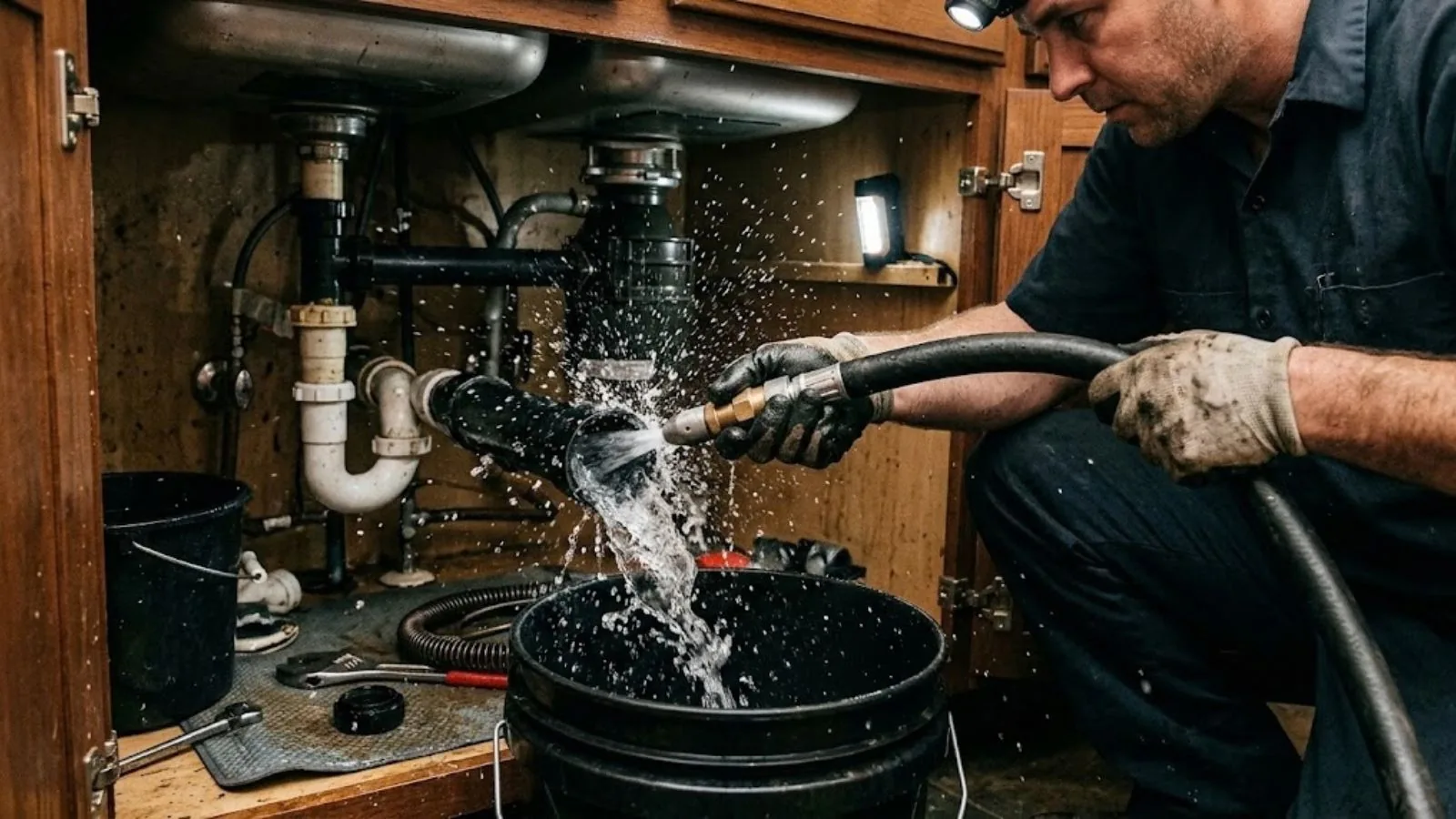
Kitchen sink drains handle grease, food particles, and starches that solidify and accumulate along the interior of the pipe over time, even with a garbage disposal in regular use. A kitchen that does a lot of cooking, especially with oil-heavy dishes, will generally build up residue faster than a kitchen used mainly for reheating and light prep. For a household that cooks regularly, an annual professional cleaning, ideally hydro jetting rather than a basic snake, since jetting actually scours the interior wall rather than punching a path through buildup, is a reasonable baseline rather than waiting for an actual clog.
Bathroom Drains Depend on Household Size and Hair
Bathroom sink and shower drains accumulate hair and soap scum, and the rate depends heavily on how many people use that specific bathroom and hair length among them. A single-occupant bathroom might go years without needing professional attention beyond routine hair removal; a bathroom shared by a larger household with longer hair among its members will need more frequent drain cleaning to stay ahead of buildup.
The Main Line Is a Different Conversation
Your home's main sewer line carries everything from every drain in the house, and its maintenance schedule depends more on the pipe's age and material than on daily household habits. Older clay or cast-iron lines, more common in San Marcos's established neighborhoods, benefit from periodic inspection and cleaning specifically because they're more prone to root intrusion at pipe joints over decades. Newer PVC lines are generally more resistant to this specific issue, which can mean longer reasonable intervals between main line service.
Signs That Override Any Schedule
Regardless of how recently a drain was last cleaned, certain signs mean it's time regardless of the calendar: a drain that's noticeably slower than it used to be, gurgling from one fixture when another is used, or a clog that keeps returning to the same spot after clearing. A recurring clog in particular is a sign the underlying pipe condition, not just accumulated debris, needs a closer look.
A Reasonable Default If You're Not Sure
If none of the above gives you a clear answer for your specific situation, an annual check on kitchen lines and main sewer access points, with bathroom drains addressed as symptoms actually appear, is a sensible default for most San Marcos households. It's meaningfully cheaper than waiting for a full backup, and a periodic camera inspection of the main line can catch a developing root intrusion or pipe issue years before it becomes an emergency call.
The bottom line: drain cleaning frequency isn't a fixed number so much as a response to what actually runs through your specific pipes, how old they are, and what symptoms, if any, you're already noticing.
Signs Your Current Schedule Isn't Frequent Enough
If a drain that was recently cleaned is already showing the same slowness within just a few months, that's a reasonably clear signal the current interval isn't matching how quickly buildup is accumulating in that specific line, and it's worth tightening the schedule rather than repeating the same cycle of waiting for the same symptom to reappear. This is more common with kitchen lines in households that cook frequently than with bathroom lines, simply because grease and food residue accumulate faster than typical hair and soap scum under normal use.
Why Chemical Drain Cleaners Aren't a Substitute
It's worth addressing directly: regularly using chemical drain cleaners instead of professional cleaning isn't a comparable substitute, even though it feels like routine maintenance. These products typically dissolve or push through a portion of a clog rather than clearing the full interior diameter of the pipe, and repeated use can actually accelerate corrosion in older galvanized or even some plastic piping, depending on the specific chemical formulation. A drain that seems to need chemical treatment on a recurring basis is generally a better candidate for professional service that addresses the actual buildup than for continuing the same temporary fix indefinitely.
How This Adds Up Over the Life of a Home
Thinking about drain maintenance as a one-time reaction to a clog rather than an ongoing part of home upkeep tends to cost more over time, not less. A household that addresses kitchen and main line buildup on a reasonable schedule generally spends less in total across a decade than one that waits for full backups to force emergency calls, since emergency service, water damage from an overflow, and the eventual clearing all cost more together than the same clearing done proactively and on a predictable schedule.
Keeping a Simple Record
A basic record of when each area of your home's drains were last professionally cleaned, even just a note in a phone app or a household maintenance log, makes it much easier to notice when something is happening faster than expected. Without that record, it's easy to lose track of whether it's been six months or three years since the kitchen line was last cleared, which makes it harder to judge whether a new symptom represents a normal interval or a sign that something has changed and warrants a closer look, and a written record removes that guesswork entirely from the equation.
Ultimately, the right schedule for your specific home is the one that keeps you well ahead of symptoms rather than reacting to them after they've already become inconvenient and genuinely quite costly.
Need a Plumber in San Marcos?
San Marcos Express Plumbing dispatches throughout San Marcos and the surrounding North County inland San Diego County area, 24/7 emergency dispatch.
Call (760) 986-1999