Low water pressure is one of those problems that can have a genuinely simple cause or a genuinely expensive one, and the symptom alone doesn't tell you which. In San Marcos's older neighborhoods specifically, pipe age is a common factor, but it's far from the only one worth ruling out first.
Start With the Simple Possibilities
Before assuming the worst, it's worth checking whether the low pressure is affecting the whole house or just one fixture. A single low-pressure faucet often points to a clogged aerator, the small mesh screen at the tip of the spout, filled with mineral deposits from hard water, which is a simple cleaning fix rather than a plumbing emergency. If it's isolated to hot water specifically but cold water pressure is fine at the same fixture, that can point toward a partially closed valve on the water heater itself.
Whole-House Low Pressure Points Further Upstream
If every fixture in the house shows reduced pressure, the cause is further back in the system, at the main line, a pressure regulator, or a shared point that affects the whole house rather than one fixture. A pressure regulator that's failed or drifted out of calibration is a relatively simple and inexpensive fix once identified, and it's worth ruling out before assuming something more serious.
The Galvanized Pipe Factor in Older Homes
For homes with original galvanized steel supply lines, which corrode from the inside out over decades, gradually narrowing pipe diameter is a genuine and common cause of pressure that's declined slowly over years rather than dropped suddenly. This kind of gradual decline is easy to miss because it happens slowly enough that you adjust to it without noticing, until a direct comparison, visiting a friend's newer home, for instance, makes the difference obvious.
A Sudden Drop Is a Different Story Than a Gradual One
A pressure drop that happens suddenly, rather than gradually over years, points toward something acute, a leak somewhere in the system diverting water, a valve that's partially closed, or in rarer cases a problem with the municipal supply itself. Sudden drops are worth investigating sooner rather than later, since an active leak diverting pressure is also actively causing water damage somewhere.
When the Answer Is the Service Line Itself
If the pressure issue isn't resolved by ruling out fixtures, valves, and the regulator, the next place to look is the service line between the meter and the house, especially on an older galvanized line where internal corrosion has had decades to narrow the pipe. At that point, the conversation shifts from a simple fix to weighing repair against full line replacement, and in some cases toward a broader whole-home repipe if the interior plumbing shows the same age-related pattern as the service line itself.
The honest answer to "why is my pressure low" really is "it depends," but working through the possibilities in order, simple fixture issues first, then whole-house causes, then pipe condition, gets you to the right answer faster than guessing at the most dramatic explanation first.
How to Test Your Actual Pressure Rather Than Guessing
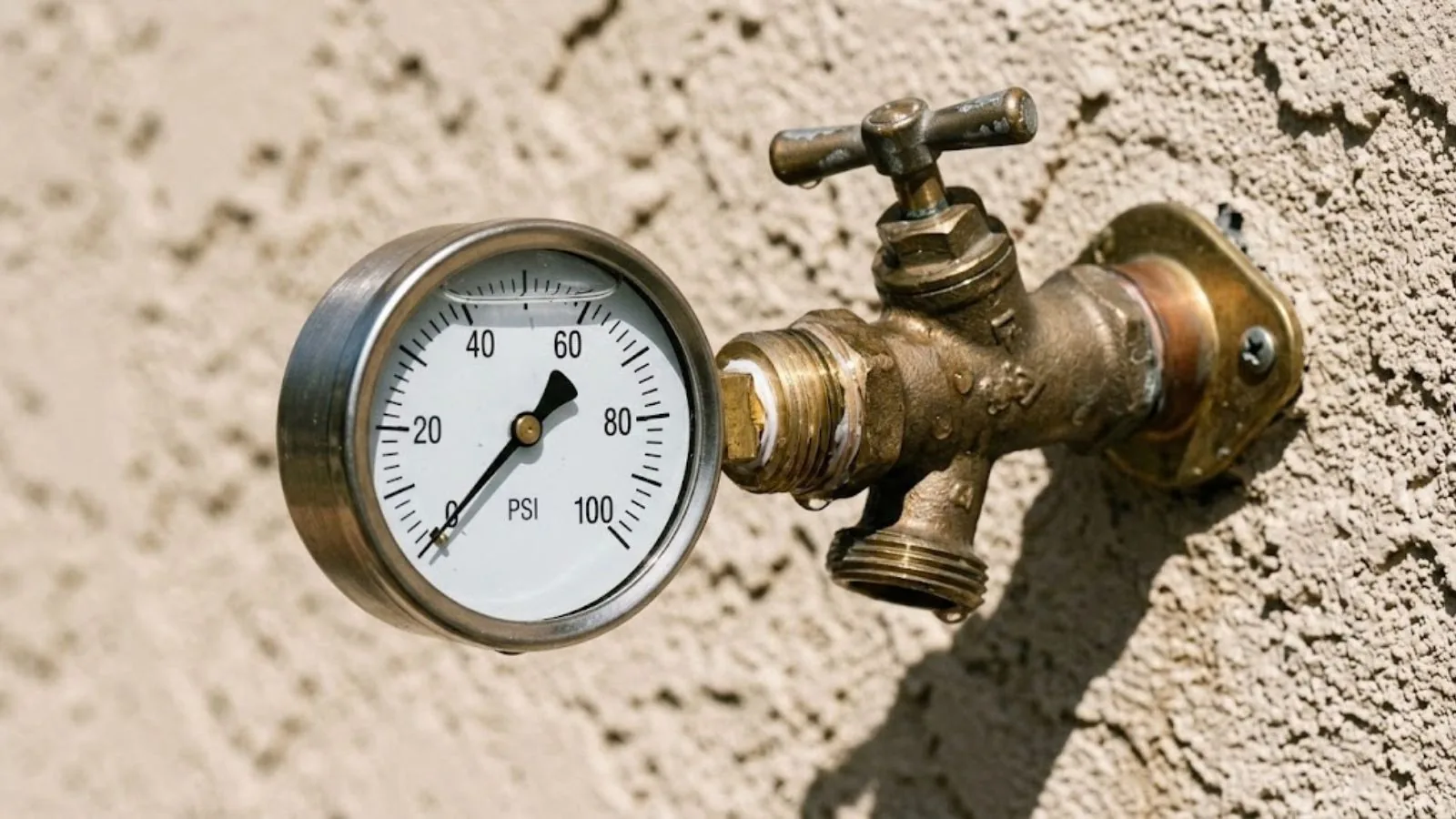
If you want a real number rather than a subjective impression, a pressure gauge that threads onto an outdoor hose bib is an inexpensive way to get an actual reading. Typical residential water pressure runs somewhere in the 45 to 80 PSI range, and consistently reading below that on a gauge, rather than just "feeling" low in the shower, gives you something concrete to describe if you do end up needing a professional diagnosis. It also helps distinguish between genuinely low pressure and reduced flow, which can feel similar at a fixture but have different underlying causes, flow being more often about clogs or partially closed valves, and pressure being more often about the regulator or supply line itself.
When Neighbors' Homes Are a Useful Comparison
Because pressure loss from aging galvanized pipe happens gradually, it's genuinely useful to compare notes with a neighbor in a similarly aged home, particularly one who's already had plumbing work done. If their pressure is noticeably better after a repipe or line replacement and your homes were built in the same era, that's a reasonably strong signal your own aging plumbing is a meaningful contributor to what you're experiencing, rather than something specific to your particular fixtures or a municipal supply issue affecting the whole street equally.
Why Pressure-Boosting Isn't Always the Right Fix
It's tempting to treat low pressure as something a booster pump can simply solve regardless of cause, but adding a pump to compensate for a genuinely corroded, narrowed galvanized line doesn't address the underlying problem, and can in some cases push a fragile, aging pipe closer to actual failure by increasing the pressure it has to handle. A booster pump is a reasonable tool for specific situations, like a home at the far end of a municipal supply line with naturally lower incoming pressure, but it's not a substitute for addressing pipe condition when that's the actual root cause.
Keeping a Baseline for Future Comparison
If you do get an actual pressure reading, whether from a gauge test or a professional visit, recording that number somewhere gives you a genuine baseline to compare against down the road. Without a documented starting point, a gradual decline over several years is nearly impossible to notice with confidence, since human memory of "what normal used to feel like" fades faster than an actual pressure change occurs, and a simple written note settles the question with certainty rather than relying on a subjective impression that may not be accurate.
Whatever the eventual diagnosis turns out to be, working through the possibilities methodically gets you to an accurate answer faster than assuming the most expensive explanation first.
Need a Plumber in San Marcos?
San Marcos Express Plumbing dispatches throughout San Marcos and the surrounding North County inland San Diego County area, 24/7 emergency dispatch.
Call (760) 986-1999