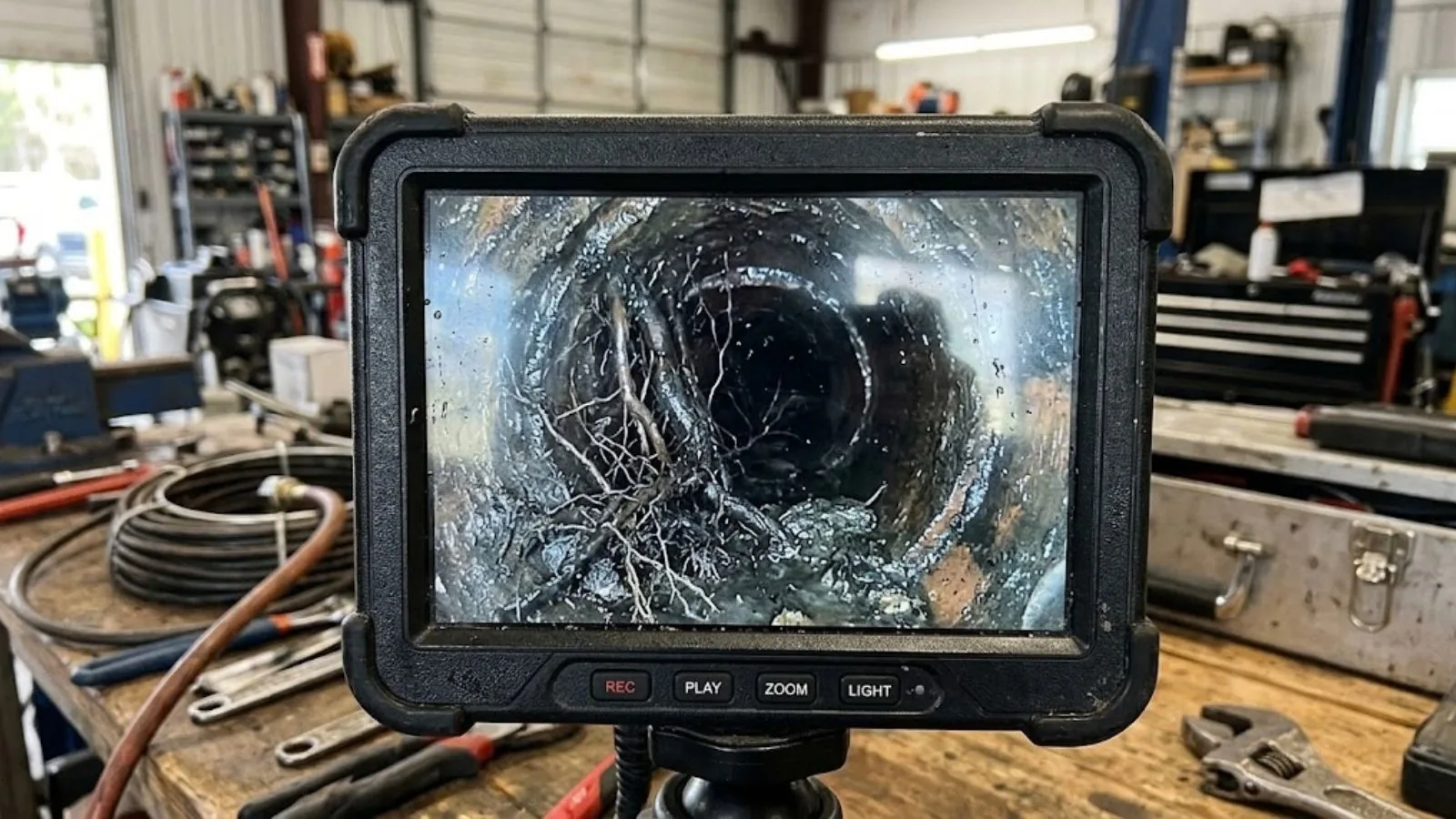
A main sewer line problem is easy to miss at first because the early signs don't look like a plumbing emergency, they look like a handful of small, unrelated annoyances. By the time they add up to an obvious picture, the underlying issue has often had time to get worse. Here's what actually points toward the main line rather than an isolated fixture problem.
1. More Than One Drain Is Slow at the Same Time
A single slow drain usually means something local to that fixture, hair, soap scum, grease. When two or more drains in different parts of the house are slow at the same time, especially if they share the same section of the home's drain system, that points further downstream toward the main line rather than an isolated clog.
2. The Lowest Drain in the House Backs Up First
Because wastewater flows downhill through your plumbing, a main line blockage typically shows up first at whichever fixture sits lowest in your drainage system, often a basement floor drain or the lowest-level bathroom. If that's the drain acting up while everything else seems fine, it's a fairly specific signal worth paying attention to.
3. Gurgling When You Flush
A gurgling sound from a sink or tub drain right when you flush a toilet elsewhere in the house suggests air is being displaced somewhere in the shared line, a sign that flow through the main line isn't happening as freely as it should.
4. Sewage Odor Near a Cleanout or in the Yard
If you notice a sewage smell outside near your home's cleanout access point, or in a specific patch of yard, that can indicate a line problem allowing gas or, in more advanced cases, actual wastewater to escape before reaching the street connection.
5. An Unusually Green Patch of Lawn Along the Line's Path
Wastewater is, ironically, a decent fertilizer in small amounts. A section of lawn that's noticeably greener and more lush than the surrounding grass, especially if it follows the likely path of your sewer line, can indicate a slow leak feeding that specific patch of ground.
What Actually Confirms the Diagnosis
None of these signs alone proves a sewer line problem with certainty, which is exactly why a camera inspection is the standard next step once a few of them show up together. Running a camera through the line via an access cleanout shows the actual interior condition, root intrusion, a collapsed section, or simple buildup that a thorough cleaning would resolve, rather than guessing based on symptoms alone. Older clay and cast-iron lines, more common in San Marcos's established neighborhoods, are particularly prone to root intrusion at pipe joints over enough years.
What Happens After the Inspection
Depending on what the camera finds, the fix could be as simple as a thorough hydro jetting to clear accumulated buildup, or as involved as a targeted or full sewer line repair if there's structural damage. The point of the inspection is avoiding a guess in either direction: treating a structural problem as a simple clog just delays the real fix, and treating a simple clog as a structural emergency means unnecessary cost and disruption.
If you're noticing two or more of these signs together, it's worth getting ahead of it with an inspection rather than waiting for a full backup to force the issue on its own schedule.
How Camera Inspections Have Changed This Diagnosis
Before sewer cameras became standard equipment, diagnosing a suspected main line problem often meant a more invasive process, sometimes involving exploratory digging based on where symptoms seemed strongest, which wasn't always where the actual problem was located. A camera run through an access cleanout now shows the pipe's interior condition directly and in real time, which means the diagnosis and the eventual repair location are both based on what's actually visible inside the pipe rather than an educated guess from surface-level symptoms. This has made both the diagnostic process and the resulting repairs meaningfully more targeted than they were even a couple of decades ago.
How Often a Healthy Line Should Be Checked
For a home with no symptoms at all, there's no strict universal schedule for main line inspection, but a periodic camera check, particularly for older homes with clay or cast-iron lines, catches developing issues like early root intrusion well before they progress to an actual backup. This is especially worth considering before a major landscaping project that might otherwise disturb root systems near a known line path, or simply as part of a broader home maintenance routine for a property that's never had its sewer line inspected since it was built.
What a Home Purchase Should Prompt You to Check
If you're buying an older San Marcos home, a sewer line camera inspection is worth requesting as part of due diligence, separate from a standard general home inspection, which typically doesn't include this level of detail on the sewer line specifically. A line with early-stage root intrusion or aging joints might show no symptoms at all under the previous owner's typical usage patterns, only to become a problem once a new household's different usage habits or simply another few years of aging push it past the point where it was quietly managing.
Cost Ranges Worth Knowing Before You're in the Middle of It
Understanding roughly where a sewer issue could land on the cost spectrum helps set realistic expectations before a camera inspection returns results. A simple thorough clearing sits at the lower end, a targeted spot repair or trenchless lining sits in the middle, and a full section replacement requiring excavation sits at the higher end. Most sewer problems, when caught before they progress to a full collapse, fall closer to the lower and middle end of that range, which is itself a reasonable argument for inspecting proactively rather than waiting for symptoms to force the issue at its most expensive stage.
Need a Plumber in San Marcos?
San Marcos Express Plumbing dispatches throughout San Marcos and the surrounding North County inland San Diego County area, 24/7 emergency dispatch.
Call (760) 986-1999