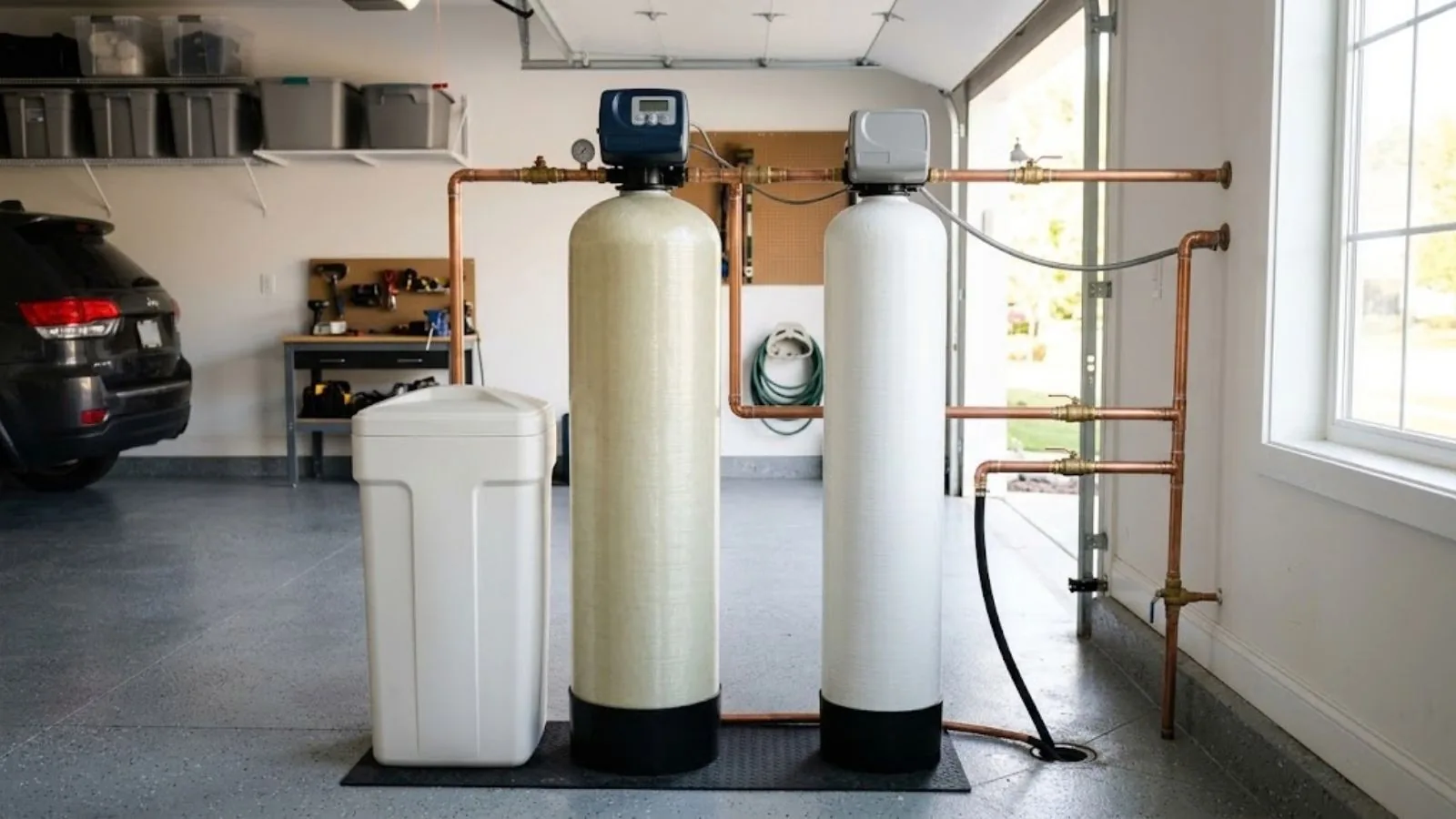
"I want a water filter for the hard water" is one of the more common phrases we hear, and it points to a genuine mix-up worth clearing up before anyone spends money on the wrong system. Filtration and softening solve different problems, and installing one when you actually need the other means the issue you were trying to fix is still there.
What a Water Softener Actually Does
A water softener uses an ion-exchange process, resin beads inside the tank swap out calcium and magnesium ions, the minerals that make water "hard," for sodium or potassium ions instead. It then periodically regenerates using a brine solution to recharge that resin's capacity. This is the only category of system that actually removes hardness. If your concern is water heater longevity, mineral spots on dishes and fixtures, or soap that doesn't lather well, a softener is the specific tool for that problem.
What Water Filtration Actually Does
Filtration addresses a completely different set of concerns: sediment, chlorine taste and odor, and certain other contaminants, depending on the filtration media used. A whole-home filtration system will not remove hardness minerals, calcium and magnesium pass right through standard sediment and carbon filtration media, because filtration isn't designed to target them the way ion-exchange softening specifically is.
Why the Confusion Is So Common
Part of the mix-up is marketing, plenty of consumer-grade "water filter" products are sold with language that implies broader water quality improvement than they actually deliver, and some combination systems do include both functions in one unit, which blurs the line further in everyday conversation. But mechanically, at the level of what's actually happening to the water passing through, softening and filtration remain two distinct processes solving two distinct problems.
Can You Need Both?
Yes, and many San Marcos households reasonably do. Hardness and other water quality concerns like chlorine taste or sediment aren't mutually exclusive, a home can have genuinely hard water and also want better-tasting drinking water or reduced sediment reaching appliances. In that case, a combined approach, softening plus filtration, addresses both rather than expecting one system to cover ground it wasn't designed for.
Figuring Out Which You Actually Need
A basic water test is the most reliable starting point, since it tells you the actual hardness level and any other specific concerns in your supply rather than guessing based on symptoms alone. From there, the choice becomes straightforward: hardness-related symptoms point to softening, taste or sediment concerns point to filtration, and both together point to a combined system sized for your household's actual usage.
The short version: if the goal is protecting your water heater and fixtures from mineral scale, that's a softener's job specifically. If the goal is better-tasting or cleaner water at the tap, that's what filtration is built for. Knowing which problem you're actually trying to solve is the first step to not spending money on the wrong system.
Combination Systems: Reading the Fine Print
Some products marketed as all-in-one solutions do genuinely combine both softening and filtration stages in a single housing, which can be a reasonable choice for a household that's confirmed it needs both. The important step is confirming the specific system actually includes true ion-exchange softening media, not just a marketing description that implies broader water treatment than the unit's actual components deliver. Reading the specific media and process involved, rather than relying on the product name alone, is the only reliable way to know what you're actually getting installed.
What a Water Test Actually Reports
A basic residential water test typically reports hardness in grains per gallon, along with readings for chlorine, iron, and sometimes pH and other minerals depending on the test's scope. San Diego County's water is generally considered moderately to significantly hard on standard hardness scales, though exact levels can vary somewhat by specific supply source and season. Having an actual number, rather than going by symptoms alone, makes it possible to size a softener correctly for your household's usage rather than guessing at capacity and either under- or over-sizing the system.
The Maintenance Side Nobody Asks About Upfront
A softener requires ongoing salt refills to its brine tank, generally every few weeks to a couple of months depending on household size and water usage, plus periodic checks for a hardened salt crust that can form and interfere with proper regeneration if left unaddressed. Filtration systems require their own maintenance in the form of periodic cartridge or media replacement on a schedule that varies by system and usage. Neither is especially burdensome once it's part of a routine, but both require some ongoing attention, which is worth factoring into the decision alongside the upfront installation cost, since a system that gets neglected on maintenance stops delivering its intended benefit even though it's still physically installed and running water through it.
Rental Properties and Softening: A Different Calculation
For a rental property, the softening versus filtration decision sometimes comes down less to water quality preference and more to protecting the property owner's investment in installed appliances. A softener that extends water heater and fixture lifespan across multiple tenants over years can represent a genuine, calculable return relative to more frequent appliance replacement, which is a different framing than the personal comfort and taste considerations that typically drive an owner-occupied household's decision.
Renting a Softener vs. Owning One Outright
Some providers offer softener rental or lease-to-own arrangements rather than a straight purchase, which can lower the upfront cost at the expense of paying more over the system's lifetime. Whether that tradeoff makes sense depends on how long you plan to stay in the home and whether you'd rather spread the cost out or own the equipment outright from the start, a genuinely personal financial decision rather than one with a universally correct answer.
Need a Plumber in San Marcos?
San Marcos Express Plumbing dispatches throughout San Marcos and the surrounding North County inland San Diego County area, 24/7 emergency dispatch.
Call (760) 986-1999