Plumbing problems don't come with a label telling you whether they can wait until morning or need attention right now, and it's a genuinely reasonable question to have at midnight when something's gone wrong. Here's a practical way to think through it.
Active, Uncontrolled Water Is Always an Emergency
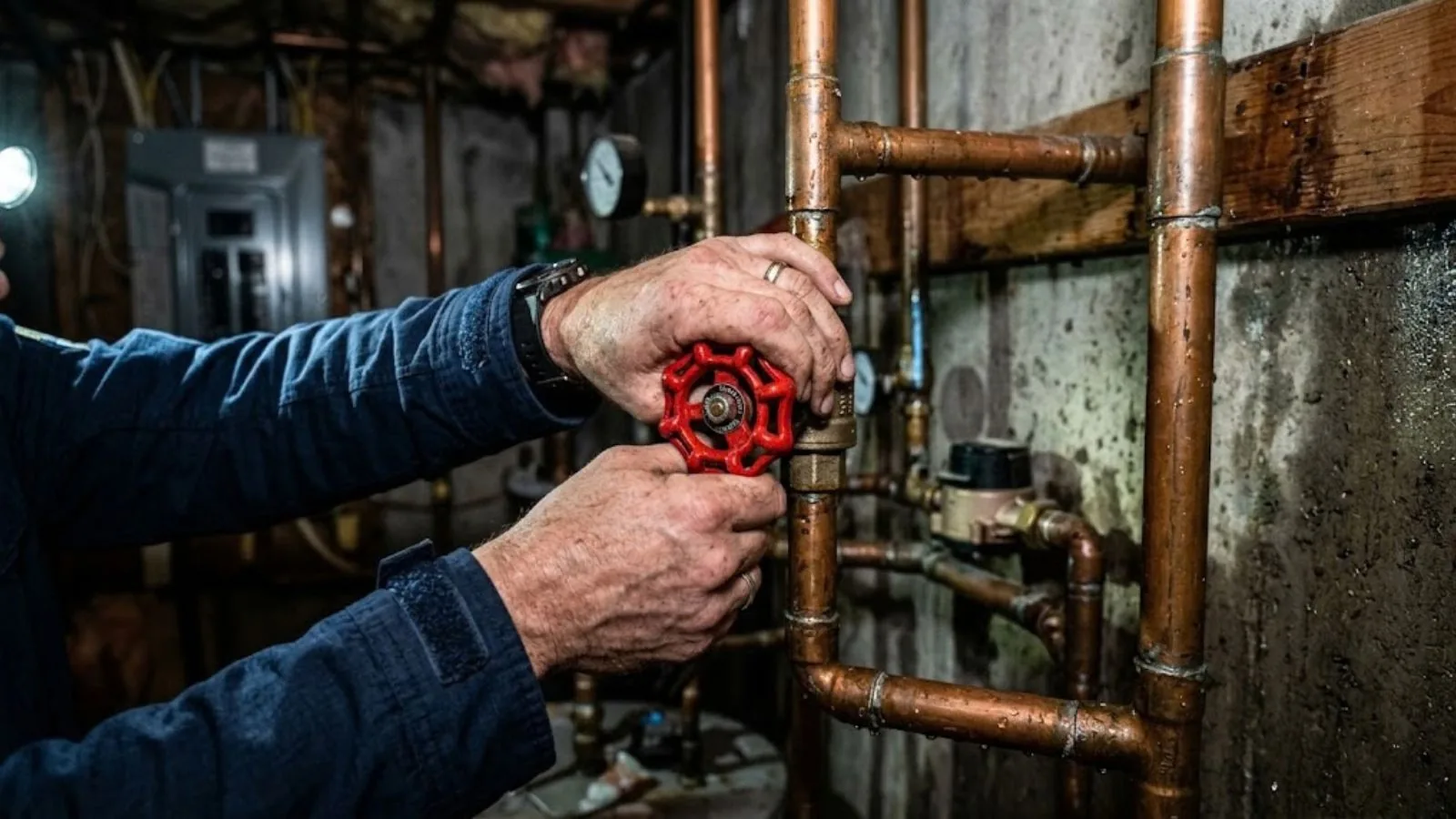
A burst pipe, a supply line that's disconnected, or any situation where water is actively flowing and you can't stop it by closing a local valve is unambiguously an emergency. Every additional minute means more water damage, and the priority is stopping the flow, locating the nearest shutoff valve or the home's main shutoff, before anything else, including calling for help.
No Hot Water Is Usually Not an Emergency, With One Exception
A water heater that's stopped producing hot water is an inconvenience, not a true emergency, in the large majority of cases, it can typically wait until normal business hours. The exception is if it's actively leaking alongside the lack of hot water, which changes the calculation from "annoying" to "water is accumulating somewhere it shouldn't."
A Clogged Drain Depends on What's Backing Up
A single slow or clogged drain, even a fully backed-up one, is generally not an emergency if it's isolated to one fixture and you can avoid using it until a normal appointment. A sewage backup affecting multiple fixtures, especially if it's coming up into a tub or shower rather than staying contained in a toilet, is a different situation, that's an active sanitation and water damage issue that shouldn't wait.
A Running Toilet Can Almost Always Wait
As wasteful and mildly annoying as a running toilet is, it's very rarely an emergency. The exception would be if it's also overflowing or the tank has developed an actual leak, at which point it's no longer just a running toilet.
Gas Smell Is Always an Emergency, No Exceptions
A suspected gas leak is treated differently from every other category here, leave the area, avoid creating any spark including light switches, and call from outside rather than investigating yourself. This isn't a judgment call the way water-related issues sometimes are; it's a safety issue with genuine stakes.
The Simple Test: Is Damage Actively Accumulating?
If you strip away the specifics, the underlying question that actually matters is whether damage or risk is actively getting worse by the minute, or whether the situation, while unpleasant, is essentially stable until someone can look at it during normal hours. Active flooding, gas smell, and sewage backup into living spaces all fail that test and warrant immediate emergency response. A slow drain, a running toilet, or a lack of hot water generally pass it and can be scheduled as regular plumbing repair calls instead.
When genuinely unsure, it's reasonable to call and describe what's happening, a real dispatcher can help sort out urgency faster than trying to self-diagnose severity at midnight based on internet articles, this one included.
Why Over-Calling Isn't Actually a Problem
Some people hesitate to call about something that might not turn out to be a true emergency, worried about wasting anyone's time or paying an unnecessary after-hours rate. In practice, describing symptoms to dispatch and getting a read on urgency costs you nothing but a phone call, and it's a far better outcome than either sitting on an actual emergency because you talked yourself out of calling, or paying an emergency rate for something that genuinely could have waited because you assumed the worst without checking. The point of having a real person answer is exactly to take that guesswork off your plate.
Keeping a Mental Checklist Before Anything Happens
The best time to think through these categories is before you're actually dealing with a midnight plumbing problem, not during one. Knowing in advance where your main shutoff valve is, roughly what a gas smell versus a normal household odor smells like, and which of your fixtures have their own local shutoff valves gives you a real head start if something does go wrong, rather than trying to locate a shutoff valve for the first time while standing in an inch of water.
A Quick Reference for the Categories
To summarize the actual decision framework: active uncontrolled water and any gas smell are always emergencies, no exceptions. Sewage backup into multiple fixtures or living spaces is generally an emergency. A single slow or clogged drain, a lack of hot water without an accompanying leak, and a running toilet are generally not emergencies and can be scheduled during normal hours. When a situation doesn't clearly fit either category, describing it to a real dispatcher rather than guessing alone is the most reliable way to get an accurate read on urgency specific to your actual circumstances.
Why Framing It This Way Actually Helps
Thinking in terms of "is damage actively accumulating" rather than "how bad does this feel" removes a lot of the emotional guesswork from a stressful moment. A dramatic-sounding noise or smell that isn't actually causing ongoing harm can wait; a quiet, easy-to-ignore drip that's steadily flooding a space you can't see often can't. Reframing the question this way is a genuinely useful habit for evaluating any household problem at an inconvenient hour, plumbing included, and it tends to lead to calmer, more accurate decisions than reacting purely on instinct in the moment.
Most plumbing problems, even ones that feel urgent in the moment, turn out to fall on the "can wait" side of that line once you actually think through what's happening rather than reacting to how alarming it sounds in the moment it occurs.
Keep this framework in mind the next time something goes wrong at an inconvenient hour, it usually points to a clearer answer than panic alone would suggest.
Need a Plumber in San Marcos?
San Marcos Express Plumbing dispatches throughout San Marcos and the surrounding North County inland San Diego County area, 24/7 emergency dispatch.
Call (760) 986-1999