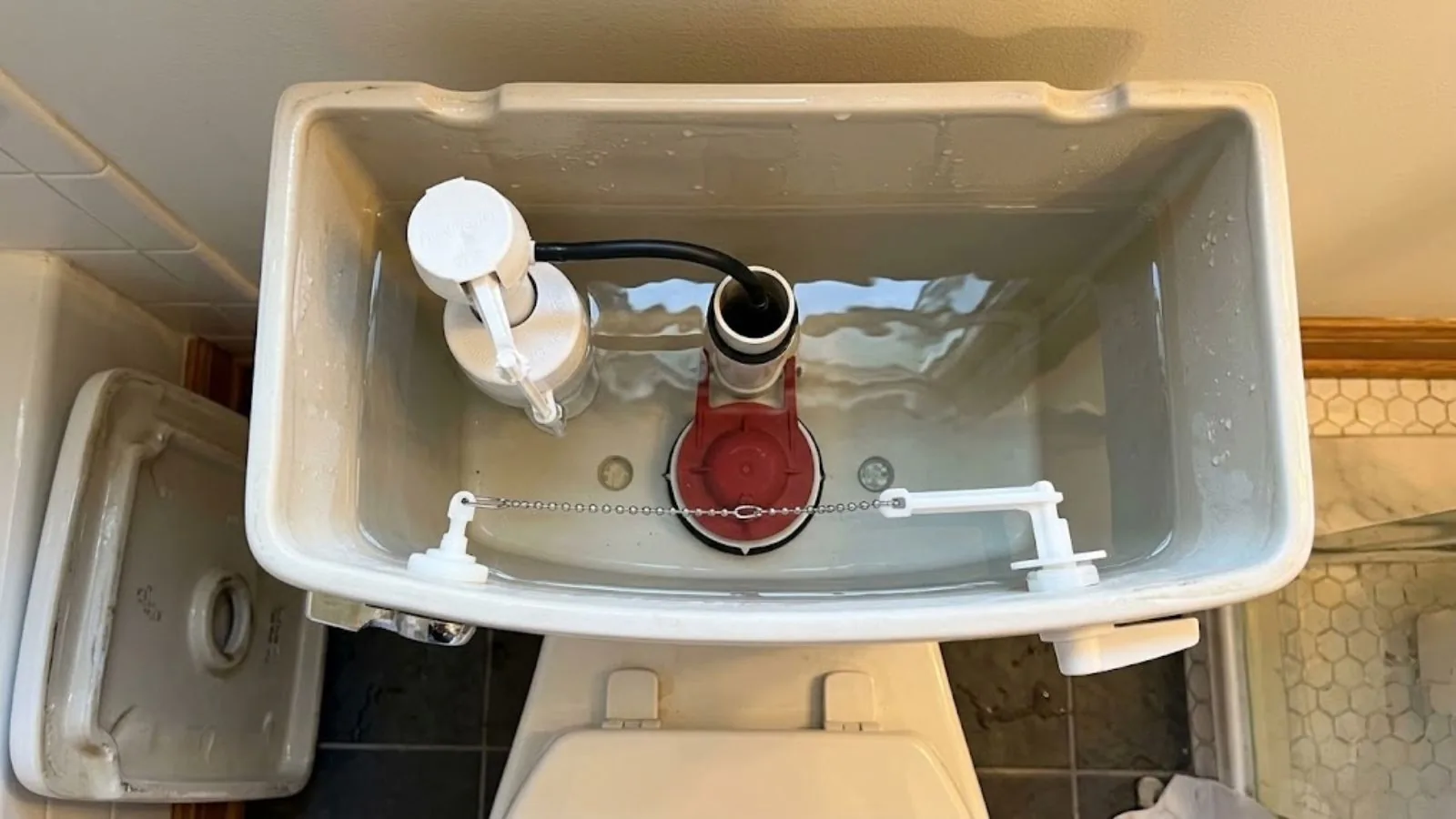
A toilet that runs on its own, sometimes constantly, sometimes in short bursts every few minutes, is one of the most common household plumbing complaints, and also one of the more wasteful ones to ignore. A continuously running toilet can waste hundreds of gallons of water in a single day, which shows up as a real line item on your water bill long before it becomes an emergency.
The Flapper Is the Most Common Culprit
Inside every standard toilet tank is a flapper, a rubber seal that lifts when you flush, releasing water into the bowl, then drops back down to seal the tank. Over time, that rubber degrades, warps, or accumulates enough mineral buildup that it no longer forms a complete seal. When that happens, water slowly leaks from the tank into the bowl, the fill valve senses the drop and tops the tank back up, and the cycle repeats, sometimes constantly, sometimes every few minutes depending on how bad the seal has gotten.
How to Check It Yourself
There's a simple test that doesn't require opening anything up: put a few drops of food coloring into the tank, wait about 15 minutes without flushing, and check the bowl. If color has made its way into the bowl water, the flapper isn't sealing and water is leaking past it. This is a cheap, fast way to confirm the diagnosis before deciding what to do about it.
It's Not Always the Flapper
A fill valve set too high, so the tank fills past the overflow tube and constantly drains excess water, produces a similar symptom without a flapper problem at all. So does a flapper chain that's gotten tangled or is too short, holding the flapper slightly open after every flush. These are generally simple adjustments rather than part replacements, but they're easy to misdiagnose as a worse problem if you're not sure what you're looking at inside the tank.
When It's a Bigger Issue
If the toilet is also rocking slightly when you sit on it, or you notice water pooling at the base after flushing, that's a different and more serious problem, a failed wax ring seal or a cracked flange, either of which can allow water to leak underneath the toilet and, left long enough, affect the subfloor. That's not a flapper issue and isn't something to try to diagnose with food coloring; it needs a proper inspection sooner rather than later, since subfloor damage gets more expensive the longer it's allowed to continue.
Parts Are Cheap; Water Isn't Free
A flapper or fill valve replacement is one of the least expensive plumbing repairs there is, which makes the wasted water from ignoring a running toilet a genuinely poor trade. If you've confirmed the flapper is the issue and you're comfortable with basic tank hardware, it's a reasonable DIY fix for many homeowners. If you're not sure what you're looking at, or the problem keeps coming back after a replacement, that's usually a sign something else in the tank assembly isn't matched correctly, and it's worth having someone look at the whole system rather than swapping parts repeatedly.
Either way, a toilet that won't stop running is rarely an emergency, but it's also rarely worth ignoring for months at a time. The fix is almost always small; the water bill impact of not fixing it isn't.
Ghost Flushing: A Related but Different Symptom
Some toilets don't run continuously but instead cycle briefly every few minutes to top themselves back off, sometimes called "ghost flushing." This happens when the flapper seal is degrading but hasn't failed completely, so the tank slowly loses just enough water over several minutes for the fill valve to sense the drop and add a short burst back in. It's the same underlying flapper issue as constant running, just at an earlier stage of the seal's failure, which means it's often easier and cheaper to address now than to wait until it progresses to continuous running.
Why Replacement Parts Should Match Your Specific Toilet
Not every flapper is interchangeable across every toilet model, even though generic universal flappers are widely sold and often work adequately. Toilets with lower-flow or dual-flush mechanisms in particular can be more sensitive to a flapper that doesn't seal at exactly the right rate, which can either cause the same running problem to persist with a new part installed, or create a new issue where the toilet doesn't flush with enough force to fully clear the bowl. If a flapper replacement doesn't resolve the running after installation, checking whether the replacement part actually matches your toilet's specific model is a reasonable next step before assuming the diagnosis itself was wrong.
The Fill Valve's Role, Beyond the Flapper
If the flapper genuinely seals properly and the running persists, the fill valve itself is the next place to look. A fill valve that's aged or has accumulated mineral deposits, common given hard water in this area, can fail to shut off completely once the tank reaches its intended level, allowing water to trickle continuously into the overflow tube rather than actually leaking past the flapper. This produces a similar sound and water waste to a flapper problem but requires a different part entirely, which is why confirming which specific component is at fault, rather than assuming it's always the flapper, saves an unnecessary second trip to the hardware store.
A Word on Older Toilet Tank Hardware
Toilets installed before the mid-1990s sometimes use tank hardware that's harder to source exact replacement parts for, which can make a universal flapper or fill valve fit imperfectly even when installed correctly. If a running problem persists despite a proper-seeming replacement on an older toilet, that mismatch is worth considering before assuming the repair itself was done wrong, sometimes the honest answer is that the specific tank hardware genuinely needs a match for that model rather than a generic universal part.
Need a Plumber in San Marcos?
San Marcos Express Plumbing dispatches throughout San Marcos and the surrounding North County inland San Diego County area, 24/7 emergency dispatch.
Call (760) 986-1999